
Gross Motor Skills Examples: Complete Guide for Toddlers & Preschoolers
Gross Motor Skills Examples: Complete Guide for Toddlers & Preschoolers
Gross motor skills are the foundation of childhood development, enabling children to run, jump, climb, and balance. Understanding gross motor skills examples helps parents and caregivers support their child's physical growth effectively. Research shows that early gross motor performance is linked to concurrent social and language development, making these skills essential for overall development.
Key Takeaways
Gross motor skills involve large muscle movements essential for physical development. Children develop these abilities progressively from infancy through preschool age.
- Infants master rolling and sitting between 3-9 months of age
- Toddlers achieve walking and climbing milestones between 12-24 months
- Preschoolers develop running, jumping, and balance skills by ages 3-5
- Structured training improves gross motor skills in 4-5 year-olds significantly
- Modern foam playsets support development through purposeful, safe play
Table of Contents
- What Are Gross Motor Skills Examples?
- Gross Motor Skills Examples for Infants (0-12 Months)
- Gross Motor Skills Examples for Toddlers (12-24 Months)
- Gross Motor Skills Examples for Preschoolers (2-5 Years)
- Why Gross Motor Skills Matter for Child Development
- Supporting Gross Motor Development at Home
- How north&nova Supports Gross Motor Skills Development
What Are Gross Motor Skills Examples?

Gross motor skills involve large muscle groups used for major movements like crawling, walking, and jumping. These skills include activities such as rolling, sitting, crawling, standing, walking, running, jumping, climbing, and balancing. Children develop these abilities sequentially as their nervous system matures and muscle strength increases. Early development of these skills creates the foundation for more complex physical activities throughout childhood.
Gross motor skills are critical for children's independence and confidence in physical activities. Unlike fine motor skills that involve small hand movements, gross motor skills enable children to navigate their environment safely and engage in play. By age 3, most children can walk, run, and climb stairs with assistance. These foundational movements support cognitive development and social interaction through active play.
- Rolling and sitting: 3-9 months of age
- Walking and climbing: 12-24 months of age
- Running and jumping: 2-4 years of age
- Balance and coordination: 3-5 years of age
Gross Motor Skills Examples for Infants (0-12 Months)
Infants develop gross motor skills in a predictable sequence starting from birth. By 3-4 months, babies can lift their head and chest when lying on their stomachs. Between 6-9 months, infants typically achieve sitting without support and begin crawling or scooting. These early milestones require safe environments where babies can practice movement freely. Parents can support development by providing tummy time and allowing supervised floor play.
Pull-to-stand movements emerge around 9-12 months as infants gain leg strength and coordination. During this stage, babies need stable furniture to hold onto while practicing balance. Foam playsets designed for infants as young as 9 months provide safe, cushioned surfaces for these critical developmental movements. Creating a supportive play environment accelerates skill acquisition and builds confidence in young learners.
Create a safe play space with proper support surfaces to encourage your infant's natural development.
Gross Motor Skills Examples for Toddlers (12-24 Months)

Toddlers experience rapid gross motor development as they transition from crawling to walking and climbing. Walking independently typically emerges between 12-15 months, followed by running and climbing stairs with support. By 18-24 months, toddlers can kick a ball, jump with both feet, and climb furniture. This period requires careful supervision and safe play environments to prevent injuries while encouraging exploration. Modern foam playsets offer safe climbing and jumping surfaces designed specifically for toddler development.
Toddlers refine balance and coordination through repetitive play and practice. By 24 months, most toddlers can walk backwards, throw a ball overhand, and navigate stairs with minimal assistance. These skills build confidence and independence. Providing varied play equipment like climbers, rockers, and steppers accelerates skill development. Foam playsets designed by physiotherapists support purposeful movement while maintaining safety through cushioned, toxin-free materials.
- Walking independently: 12-15 months
- Running and climbing: 18-24 months
- Kicking and jumping: 18-24 months
- Backward walking: 24 months
Invest in safe play equipment that supports your toddler's natural climbing and jumping impulses.
Gross Motor Skills Examples for Preschoolers (2-5 Years)
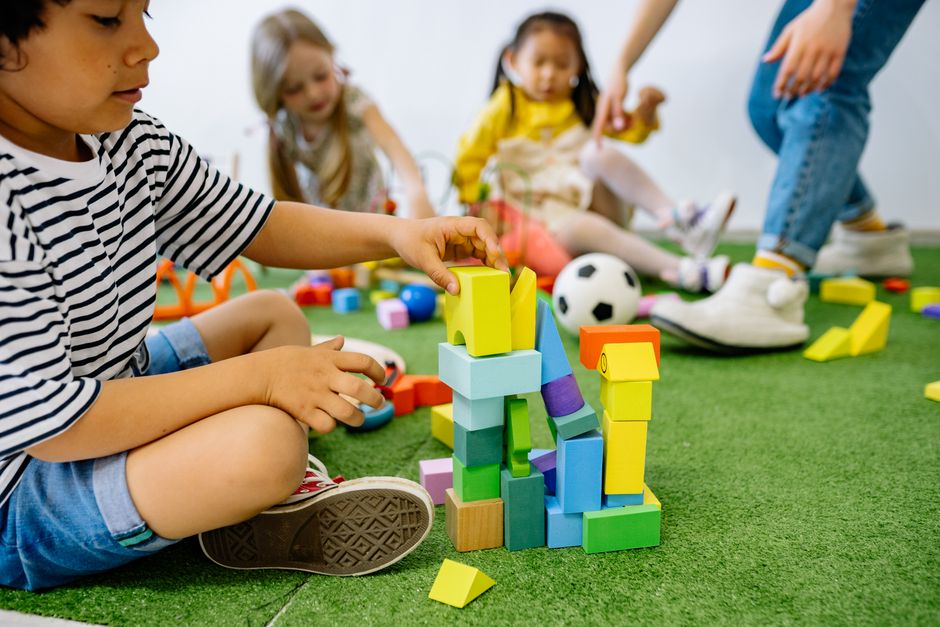
Preschoolers develop increasingly sophisticated gross motor skills that enable complex physical activities. By age 3, children can walk on tiptoes, stand on one foot briefly, and pedal a tricycle. By age 4-5, preschoolers can hop, skip, balance on one foot for 5+ seconds, and throw with accuracy. These skills reflect improved coordination, strength, and body awareness. Structured play opportunities and varied equipment enhance skill development during this critical period.
Research shows that structured training programs improve gross motor skills in 4-5 year-olds by measurable amounts. Preschoolers benefit from diverse play experiences including climbing, balancing, jumping, and running. Foam playsets with climbers, steppers, and rockers provide safe environments for practicing these skills. Third-party tested foam playsets ensure safety while children develop confidence in their physical abilities through purposeful, open-ended play.
- Tiptoe walking: Age 3
- Single-foot standing: Age 3, brief duration
- Hopping and skipping: Age 4-5
- Extended balance: Age 4-5, 5+ seconds
Provide diverse play equipment to challenge your preschooler's developing motor skills.
Why Gross Motor Skills Matter for Child Development

Gross motor skills are foundational for overall child development beyond physical abilities. Early gross motor performance is associated with concurrent prelinguistic and social development, meaning children who develop strong physical skills also tend to advance in communication and social interaction. These interconnected developments create a positive feedback loop where physical confidence supports emotional and cognitive growth. Parents who prioritize gross motor development invest in their child's holistic wellbeing.
Strong gross motor skills enable independence and reduce injury risk as children explore their environment. Modifiable factors like structured play and appropriate equipment predict children's gross motor competence. Creating supportive play spaces with safe equipment directly influences skill development outcomes. Foam playsets designed by physiotherapists combine safety with developmental purpose, supporting the natural progression of gross motor skills while maintaining aesthetic appeal in family homes.
Supporting Gross Motor Development at Home

Parents can support gross motor development by providing varied, safe play opportunities daily. Traditional games and structured play activities improve gross motor skills in children when implemented consistently. Creating dedicated play spaces with appropriate equipment removes barriers to physical activity. Foam playsets for children as young as 9 months enable year-round indoor play regardless of weather, ensuring consistent practice opportunities.
Equipment selection matters significantly for skill development outcomes. Modern foam playsets from north&nova feature water-resistant vegan leather and high-density foam construction, providing durability and easy maintenance for busy families. Free shipping within Canada and 15-20% discounts on multiple items make quality equipment accessible. Safe, aesthetically pleasing play spaces encourage daily use, accelerating skill development through consistent, purposeful practice.
- Provide varied play equipment daily
- Create dedicated, safe play spaces
- Use structured play activities consistently
- Choose toxin-free, durable equipment
Invest in quality play equipment that your family will use daily for years.
How north&nova Supports Gross Motor Skills Development

north&nova specializes in modern foam playsets designed to enhance gross motor development in children. Founded by a physiotherapist and mother of two from Ottawa, Ontario, the brand creates safe, toxin-free toys that promote active and imaginative play while integrating aesthetically into home environments. Unlike traditional plastic playsets that families often hide away, north&nova's decor-inspired designs blend seamlessly into living spaces, encouraging daily use and consistent skill practice.
The company's product range directly addresses the developmental needs outlined in gross motor skills examples. Their collections include climbers, rockers, steppers, stackers, and ball pits designed for children as young as 9 months. Each product supports specific developmental milestones: climbers build confidence and strength, rockers develop balance, steppers enhance coordination, and ball pits encourage jumping and falling safely. All products are third-party tested to ensure they're toxin-free and meet Canadian safety standards, giving parents peace of mind.
Quality and durability set north&nova apart in the market. Their playsets feature high-density foam and water-resistant vegan leather construction, making them easy to clean and built to withstand years of active play. Parents consistently praise the aesthetic appeal and functionality, noting that the equipment looks beautiful enough to display prominently rather than store away. This design philosophy directly supports developmental goals by making play equipment accessible and inviting for daily use.
Current promotions include 15% off when purchasing 2 items and 20% off for 3 or more items (excluding Mini Bounce), plus free shipping within Canada. This pricing structure makes it affordable for families to create comprehensive play environments that support multiple developmental skills simultaneously. By combining safety, aesthetics, developmental purpose, and accessibility, north&nova addresses the complete needs of modern families seeking to support their children's gross motor development.
Key Products & Services
- Climbers (multiple colors including Slate)
- Ball Pits (Cinnamon)
- Steppers
- Rockers
- Stackers
Key Benefits
- Third-party tested and certified to meet Canadian safety standards with toxin-free materials
- Designed by a physiotherapist to support purposeful gross motor development
- Decor-inspired aesthetic that integrates seamlessly into home environments
- High-density foam with water-resistant vegan leather for durability and easy maintenance
- Suitable for children as young as 9 months through preschool age
Explore north&nova's complete collection at northandnova.com to find the perfect playsets for your child's developmental stage. With free Canadian shipping and bundle discounts, creating a comprehensive home play environment has never been more accessible.
Conclusion
Understanding gross motor skills examples empowers parents to support their child's physical development effectively. From infant rolling to preschooler skipping, each milestone builds confidence and independence. north&nova's toxin-free, aesthetically designed foam playsets make it easy to create supportive play environments that encourage daily practice and skill advancement—visit northandnova.com to explore options for your child's developmental stage.
FAQ
At what age do children typically start walking independently?
Walking independently typically emerges between 12-15 months of age. Every child develops at their own pace, so variations of 2-3 months in either direction are normal. Providing safe spaces to practice balance and movement supports this natural milestone.
How can I tell if my child's gross motor development is on track?
Gross motor milestones follow predictable patterns by age, including rolling (3-6 months), sitting (6-9 months), walking (12-15 months), and running (18-24 months). If you have concerns about delays, consult your pediatrician. Providing structured play opportunities and appropriate equipment significantly supports typical development.
What's the difference between gross motor and fine motor skills?
Gross motor skills involve large muscle groups for movements like running, jumping, and climbing, while fine motor skills involve small hand movements like grasping and writing. Both are essential for development, but gross motor skills typically develop first and form the foundation for other abilities.
How much daily play time do children need for gross motor development?
Consistent, structured play activities improve gross motor skills in children most effectively. Aim for at least 60 minutes of active play daily, spread throughout the day. Indoor playsets make this achievable regardless of weather, supporting year-round skill development.
Are foam playsets safe for toddlers and preschoolers?
Modern foam playsets tested to meet Canadian safety standards are safe for children as young as 9 months. Look for third-party testing and toxin-free certifications. north&nova playsets meet all safety requirements while providing appropriate developmental challenges.
Sources
- north&nova - Modern Foam Playsets for Gross Motor Development
- Collections
- Gross Motor Skills Examples And Milestones By Age
- Gross Motor Skills for Toddlers | Children's Campus of Greenville
- Gross Motor Skill Milestones for Preschoolers
- Gross Motor Skill Milestones for Toddlers
- Gross Motor Skill Development By Age
- Gross Motor Skills for Preschoolers
- A List of Gross Motor Skills Examples by Age
- Gross Motor Skills: 90+ Examples for Kids Ages 0 to 7
- Early gross motor performance is associated with concurrent prelinguistic and social development
- Gross Motor Family Report (GM-FR) - CanChild
- Comparative analysis of three process-oriented assessment tools for identifying fundamental motor skills proficiency in children
- A Field-Based Testing Protocol for Assessing Gross Motor Skills in Preschool Children: The Children's Activity and Movement in Preschool Study Motor Skills Protocol
- Foundation: Gross Motor - Child Development (CA Dept of Education)
- Assessment of Gross Motor Development in the who Multicentre Growth Reference Study
- Motor and Self-Care Abilities - Move & Play
- Modifiable factors which predict children’s gross motor competence: a prospective cohort study
- Uncovering distinct motor development trajectories in infants during ...
- Automatic Movement Recognition for Evaluating the Gross Motor ...
- Comprehensive Assessment and Early Prediction of Gross Motor ...
- Structured training on gross motor skills and physical fitness in 4–5 ...
- Motor Skill Development at Preschool Age in Girls and Boys
- Assessing fundamental movement skills using the Test of Gross ...
- (PDF) Increasing Gross Motor Skill Through Fundamental Skill ...
- Gross Motor Skills by Age: Developmental Milestones & Examples
- Improving gross motor skills of children through traditional games ...